
Game QA Testing
Enhancing Game Quality with Expert QA Testing Solutions
We perform Game QA Testing to make certain your game gives all players a smooth, bug-free and enjoyable experience. By using both manual and automated testing, we help developers get titles that perform flawlessly on different platforms and user expectations.
12+
Years of Expertise
50+
Projects Completed
10M+
Game Downloads

Our End-to-End Game QA Testing Services
Having a team of dedicated video game QA tester, QA engineers and platform experts, we are able to deliver complete testing services covering the entire game creation process.
Functional Testing
We go through every part of your game to ensure it meets expectations. We put game structure and scoring systems, progression paths, and event triggers through many different tests to spot hidden problems.

Compatibility Testing
Your game can be smooth on some platforms, but start acting weirdly on others. Our compatibility testing looks at different devices, operating systems, screen sizes and types of input to make sure your game is smooth for all users.
AR/VR Game Testing
AR and VR change the way games are developed. The team oversees tests of gameplay, motion tracking, how the environment responds and feedback mechanisms in augmented and virtual reality.
Cross-Platform Testing
Modern games must be able to work smoothly on any platform. For any game console, computer or cloud gaming service, our tests unify the gameplay, keep the user interface identical and keep all features equal.

LiveOps QA Support
After they launch, games keep receiving updates. We testing new content, events, updates and patches while they occur in real time with our LiveOps testing services.
Prototype Testing
Before starting the main development, we help you check the early prototypes with you. We go through the mechanics, interface layouts and levels to look for areas in need of improvement.
Game Migration QA
If your game goes to a new platform, we guarantee the ported version is just as fast, gives the same experience and is fun to play as the original. All important parts of the game are examined to ensure they work as expected and that players still have a positive experience.
Character Interaction Testing
Characters within the game greatly increase the sense of being involved. Character animations, actions of non-player characters, the reaction to player inputs and fighting features are tested to be sure everything flows and looks right.
Graphics & Performance Testing
Visual quality and responsiveness define how a game feels. We test how the game runs, checks memory usage, how fast shaders function and checks visual effects while the test environment is loaded.
Our QA Game Advantage
Why Choose Our Game QA Testing Studio?
Want to take your game to the next stage using real QA game testing? Wanting to guarantee your players enjoy smooth gaming, effortless movement and all functions working well on both mobile and web? I am glad you are here. In my QA studio, we consider quality to be our foundation and main philosophy. Should you want thorough testing, compatibility checks across platforms or constant LiveOps support, we check that your game works properly before the launch and afterward too.
Key Benefits of Our QA Game Testing Approach:

Early-Stage Bug & Performance Detection

Custom Test Plans for Gameplay Mechanics

UI/UX Testing with Real-Player Scenarios

Multi-Platform QA Coverage for Broad Compatibility



Our Strength in Game QA Testing
Bringing together testers, analysts and engineers is how we make sure our services continue to work well in the gaming world. The goal is not only to make games fail but to improve them with what we learn. With years of studying various genres and platform features, we have the tools to confirm both indie arcade content and big RPG titles.

Specialists in Genre-Specific Game QA

Expert Testing of Core and Edge Case Scenarios

Modular QA Framework Built for Scalability

Testing of Animations, Assets, and Level Transitions
Structured Milestone-Based QA Delivery
Live Feedback & Reiteration Support
Tailored QA Services That Align With Your Game Vision










Ensure Game Excellence from Start to Finish: End-to-End QA Testing Process
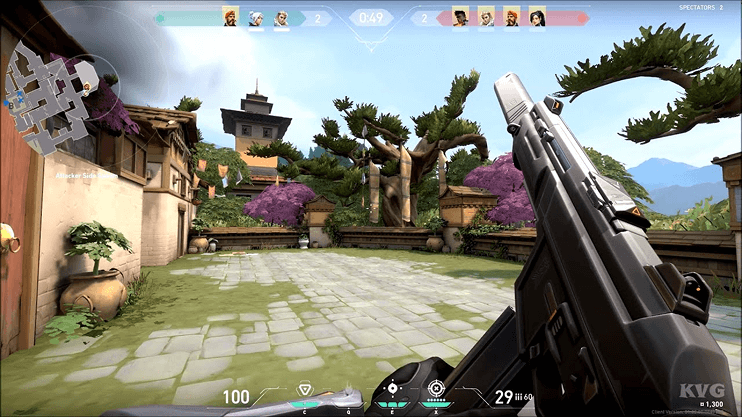
Ready to Deliver a Flawless Game Experience?
Work with StrikeOneStudios to ensure your game is released, tested, up to optimum levels and consumers have a smooth gaming experience. Reach out now so your players can enjoy the experience they’re looking for, all the time they press play.
Get Started
Getting Started with Game QA Testing Development
How Much Time Does It Take to Complete Game QA Testing?
The time required for thorough game QA testing depends on the scale, complexity, and platform compatibility of your game. Testing all aspects of the game in simple or hyper-casual ones only takes 2 to 4 weeks. However, if the project is something big, like an MMORPG or game with LiveOps, QA testing might need 3 to 6 months or even longer because of frequent updates.
The timeline includes multiple key stages:
- Test Planning and Documentation
- Test Case Development
- Functional and Non-Functional Testing
- Performance, Load, and Stress Testing
- Regression and Compatibility Testing
- Final Pre-Launch QA
Testing games such as open-world or sandbox can take a lot of time, as they feature a large area, a lot of AI, additional quests and are hard to predict by players. Every condition should be checked to make sure bugs, crashes and performance problems do not appear.
Linearly constructed games and isometric video games with set camera angles and less changeable elements can usually be tested quickly, but proper testing within navigation, the user experience and game logic is necessary despite the lessened time.
Other influencing factors include:
- Number of gameplay levels or zones
- Multiplayer features and networking
- Number of platforms targeted (PC, console, mobile)
- Localization needs and accessibility compliance
- Post-launch content cycles and patch testing
How Do Game QA Testing Services Add Value to My Gaming Project?
Considering the dangers of unexpected bugs stopping your game release? Spending on Game QA Testing Services helps provide steady, finished and polished games on all devices, regardless if you are releasing a console game or a casual mobile app. When your games compete in the tough market today, quality assurance becomes your main form of defense.
Here’s how QA testing strengthens your game:
- Bug-Free Gameplay Experience
- Multi-Device and Multi-Platform Consistency
- Boost in Player Retention and Ratings
- Compliance, Accessibility, and Localization
- Scalable and Adaptive Testing Support
The obvious plus: games feel less jittery and more absorbing for the player. QA looks for and removes game-stopping bugs, noticeable issues with visuals, broken features and problems with network connections, all before players see them.
QA checks that your game functions perfectly on all devices, various OS updates, various screen sizes and a range of hardware. No matter if your game is going out on an iOS, Android, PC, Xbox or cloud platform, QA ensures you handle anything that can happen on that device.
Games with too many bugs upset players a lot and they express their frustrations by providing poor reviews. When you focus on QA, your users keep using your app for longer, there are less cases of uninstalling and your ratings in the store boost. A game that has been well tested gains trust from your audience.
Quality assurance ensures your game follows the rules set by the gaming platform holders, makes it accessible to those with disabilities and has no mistakes in its translations for international players.
They take part in checking the game right from its first alpha versions through the release of additional post-launch content. There is support to help you adjust your tests to your schedule which might be for live patches, seasonal events or DLC release.
Company leaders can save money and time by working with expert QA teams, instead of increasing their internal workforce. More than just fixing problems, Game QA Testing turns a playable game into an outstanding experience.
What Types of QA Testing Are Included in Game QA Services?
Testing a game for QA isn’t limited to spotting bugs or checking if the game is fun. Finding and solving performance, function, graphical and usability problems in pre-release helps create a smooth and enjoyable game for everyone. Now that so many elements are part of game development—like large open worlds, multiplayer action and microtransactions—it is necessary to have several specialized tests.
Here are the main types of QA testing typically included in comprehensive Game QA Services:
- Functional Testing:
- Compatibility Testing:
- Performance Testing:
- Regression Testing:
- Localization Testing:
- Multiplayer & Network Testing:
- Security Testing:
Game testers follow this process most often to make sure that all in-game characteristics perform just as the developers intended. Testers will test character actions, finishes for different quests, the inventory and controls over every feature to see if they match expectations. Also, this includes using unexpected inputs to check that the game responds properly, checking how the game handles unexpected errors and examining in-game physics.
The game is tested on different platforms such as Windows, macOS, iOS, Android and systems like PS5, Xbox Series X and similar. Compatibility testing checks that no software errors appear when the game runs on different screens, hardware setups and OS versions. Widespread attention is key for studios releasing films on a wide scale.
The process checks out how the game behaves in normal use and under high stress. Testers test frame rates, how fast games load, the use of CPU/GPU, how much memory is consumed and battery drain. Slowdowns in performance can lead players in fast and graphics-heavy games to stop playing or feel less satisfied, since these are the types of games players expect to speed into.
When code is updated, sometimes this causes new errors in unexpected sections of the game. Regression testing helps check that new updates do not impact already working functions. Developers keep improving the design continuously as they progress.
You must conduct localization testing if your game is to be released in several parts of the world. This guarantees the text fits well, important culture notes are accurate, numbers and currency symbols match and gamers in all markets do not find anything offensive.
Any game allowing several players to interact online needs detailed checks for delays, synchronization, how the server reacts, the matching system and session stability. It is tested to see if the game handles situations like slow connections, drops and reconnects gracefully.
During security testing, forms of attack used by hackers and cheaters are revealed. The process includes finding ways someone could access the game secretly, change or add content or affect its economy.
What Are the Key Features of a Good Game in QA Testing?
A prototype in Game QA Testing Services isn’t just about design, but is also used as a testing platform. Using a prototype in QA testing helps identify problems like coding glitches, inaccurate balancing and slowdowns at an early stage of making the game. A good-quality prototype helps the QA process be both efficient and highly effective.
The following details are important from the perspective of QA testing in a good game prototype:
- Defined Core Mechanics for Test Focus
- Stable Build with Fewer Crashes
- Limited Yet Functional User Interface
- Testable Interaction Scenarios
- Clear Scope for Functional and Regression Testing
- Basic Logging and Debugging Tools
- Compatibility Considerations
Players want to verify that the game functions as intended which requires a functional base to test. A well-built prototype explains the main part of the game well, so QA game tester can detect any gaps between what they expect and what actually happens. As a result, early mistakes in reasoning, errors in rules and dysfunctional areas can be found, saving users a hassle.
Although prototypes are generally not finished, they need to remain stable so testing can be done reliably. Because crashes are common, QA teams struggle to run tests, log all the issues found and give useful advice. An executable version of the game with proper functionality makes QA work less complicated.
Having just a simple UI is important for effective usability testing. Quality assurance (QA) teams can examine how smoothly a user moves around on the site, the responsiveness of menus, the accuracy of tooltips and the path a user follows. A proper prototype presents key UI/UX elements so test users can quickly catch any issues in the design’s logic.
A prototype should be scriptable so that scenarios such as level checkpoints, interacting with items, fighting enemies and responding to environment triggers can be included. Teams in Quality Assurance test these scenarios by creating test cases that check for bugs, how AI responds, problem areas and user actions.
The better the prototype defines what needs to be tested, the better QA can work. Having a good prototype makes it possible to assess player movement, object spawns and the camera system. When features evolve, regression testing is also supported by it..
Successful Quality Assurance relies on logging what happens in the game, error messages and crash reports. Even if you’re working with early versions, having tools like console logs or event triggers speeds up finding and solving problems. Backend testers consider these features highly important.
If you’re targeting multiple platforms (PC, mobile, console), QA teams need a prototype that can simulate or run on these platforms. Testing a cross-platform prototype lets you run it on various devices, test the display at different sizes and check all types of inputs.
How Do I Know If My Game Needs a Prototype for QA Testing?
Investors in Game QA Testing Services should usually start by creating a prototype. When working on complex features, new technology or large groups of players, developers don’t always make the full game from the start. By using a prototype, QA testers can start early tests and help ensure the game is well made before full development is done.
These are several ways to spot that your game would benefit from using a prototype for QA testing:
- You’re Testing New Mechanics
- Your Development Is Feature-Driven
- You’re Targeting Multiple Platforms
- Your Team Needs Pre-Production Validation
- You Want to Build a QA Roadmap
- You’re Seeking Faster Iteration Cycles
If you have mechanics in your game that are different, you should test them apart from the rest of the game. By performing QA, testers can spot early on any issues related to usability, smoothness and conflicts, so developers can correct them at a relatively early stage.
When games are built using small increments (based on agile), prototypes are highly useful when tested by QA. Each time a prototype is built, testers check if every feature works fine on its own and also how well it fits into the system.
If working on iOS, Android or PC—or mix-and-match—a prototype allows QA team members to check the game’s behavior across devices. When prototyping beforehand, testers can find trouble with resolution, input lags, how the user interface scales on different platforms and any specific problems on certain systems.
If your studio questions the feasibility of a concept, a prototype lets QA testers look into its stability, its performance and how it works with other systems. This process stops you from investing time in developing solutions that might fall apart at scale.
The results from QA services are greatest when the tests are scheduled to match the stages of development. Test cases, risks and bugs can be handled through prototypes before the game moves into full development.
Checking your system in the prototype phase lets your dev team make quick fixes and reduces the amount of work needed to make changes later. Working with prototypes allows members of the QA team to find potential issues in the logic, extreme cases and issues with performance.
FAQ
Answers to the most frequent question.
We offer comprehensive quality assurance testing on PCs, mobiles (iOS and Android), consoles (such as PlayStation, Xbox and Nintendo), as well as for VR/AR gadgets. Tests are run on every platform and are personalized for hardware and different operating systems to provide a smooth gaming experience everywhere.
No, you don’t have to provide test cases. The QA team we assign can expertly develop test plans for your game according to what it should achieve. We perform functional, performance and exploratory testing, so that each feature of the game is comprehensively covered for your project.
Errors, performance concerns and design challenges are found through QA testing earlier, protecting the budget and making games more enjoyable for players. It makes certain your game runs properly, is well-made and supports your positive reputation. QA helps you stay assured, knowing that what you release is complete and of high quality.
Deep experience in the industry and customizable QA solutions make StrikeOneStudios a good partner for your project. You get detailed bug reports, quick return of results and testing that focuses on players. Being versatile in game genres and platforms, we support your development team closely in creating top-quality games for market release.
We carry out functional, compatibility, performance, UI/UX, regression, localization and compliance tests. Because the testing is complete and thorough, your game won’t have problems, will look impressive, run without glitches and fulfill certification requirements for all platforms at launch.
Yes, we are here to support QA tasks after launch, covering regression testing, verifying patches and testing during events. We help you handle what players are saying, ensure everything is stable and issue updates that bring fun and smoother play to your game.
JIRA and other tools help us track and report bugs openly to our partners. Our regular meetings allow us to inform you about the latest updates and what you should work on which keeps the QA process smooth and efficient.
Elevate Your Game Quality with StrikeOneStudios QA Testing
Don’t leave your game’s success to chance. Our expert QA testing services catch hidden issues, enhance player experience, and ensure your game meets the highest standards.